Velvet guide
What Is Brasso Velvet Fabric?
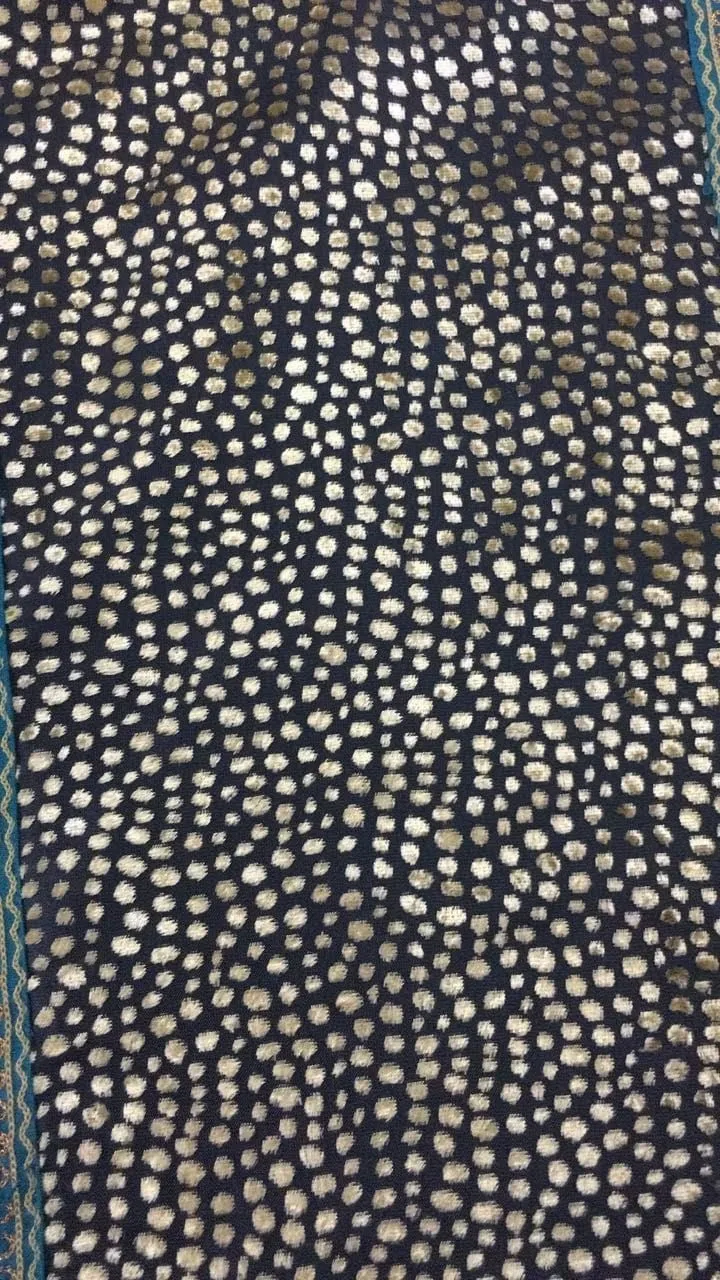
Brasso velvet is velvet with parts of its pile chemically removed, so a solid motif sits against a sheer, almost transparent ground. In Europe it is usually called devoré, from the French for devoured; in the mills and markets of India it is simply brasso. It is a light, fluid fabric, used far more for sarees, dupattas and scarves than for anything structured. This guide covers the process, the usual construction, and what to ask for when ordering.
The chemistry behind the burnout
Devoré works because different fibres react differently to the same chemical. A print paste carrying an acid salt — sodium bisulphate is the common one — is printed onto the fabric in a pattern. The cloth is dried and then baked, which releases acid and breaks down cellulosic fibres such as viscose, rayon and cotton. Fibres that resist the acid, including polyester, silk and nylon, survive untouched. Washing then carries the destroyed fibre away. What remains is a pattern of intact pile standing against a ground that has been stripped bare.
Typical construction and width
The classic build pairs a cellulosic pile with a fibre that resists the paste, so the pile burns away where printed and the base survives as a sheer chiffon. Indian brasso is normally quoted as 50D or 80D, the filament denier used in the fine polyester construction: 50D runs lighter and more transparent, 80D gives a fuller motif and slightly more body. Usable width is generally around 44 inches, and weight around 120 to 160 gsm — light, closer to a chiffon than to a furnishing velvet.
Single brasso and multi brasso
Single brasso is burnt out and dyed in one colour, so motif and ground read as tonal variations of the same shade. Multi brasso adds colour printing in register with the burnout, giving motifs in two or more colours against the sheer ground. Multi costs more per metre because it needs more screens or a digital pass, tighter registration and closer quality checking. Single brasso is the safer choice for large solid-colour ranges; multi earns its cost on statement pieces where the pattern is the selling point.
How it looks, drapes and behaves
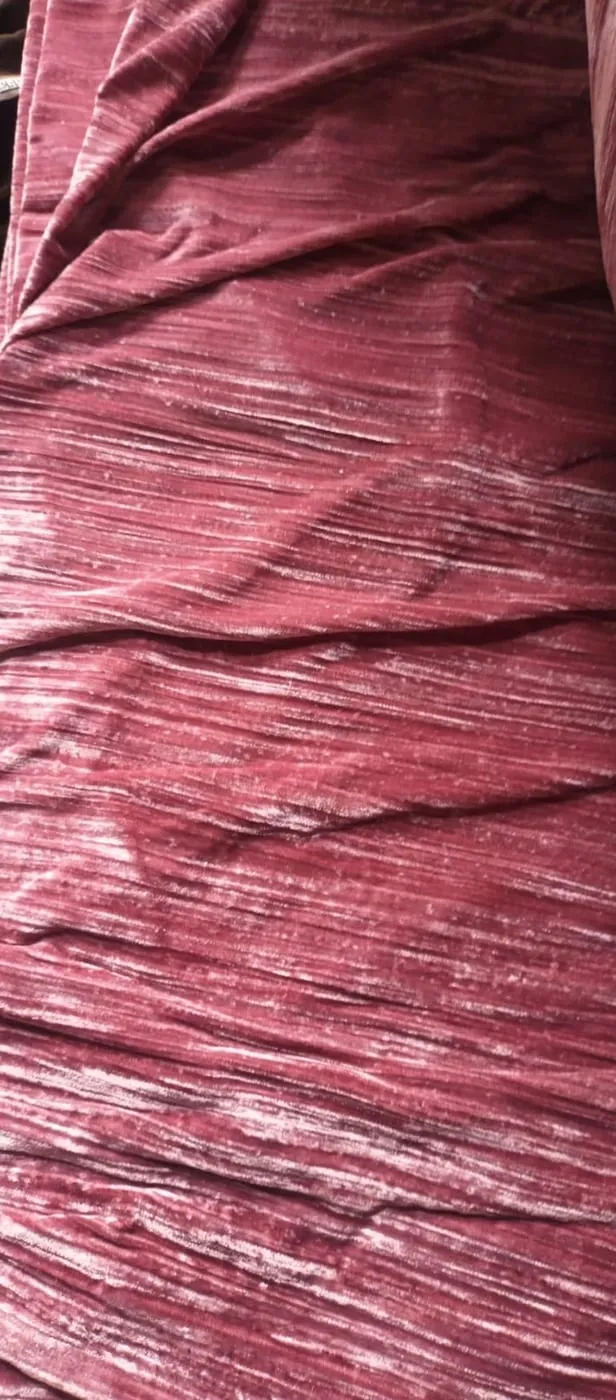
Brasso hangs softly and moves — there is no stiffness in it. Light catches the pile and passes through the burnt-out ground, so the pattern shifts with the angle of view. It is semi-transparent between motifs, which means garments almost always need a lining or an underlayer. The pile is short and takes dye deeply, so colours read rich even at low weight. On the practical side, the sheer ground is delicate: it will not carry heavy embellishment without support, and it snags on rough edges and jewellery.
Where brasso velvet is used
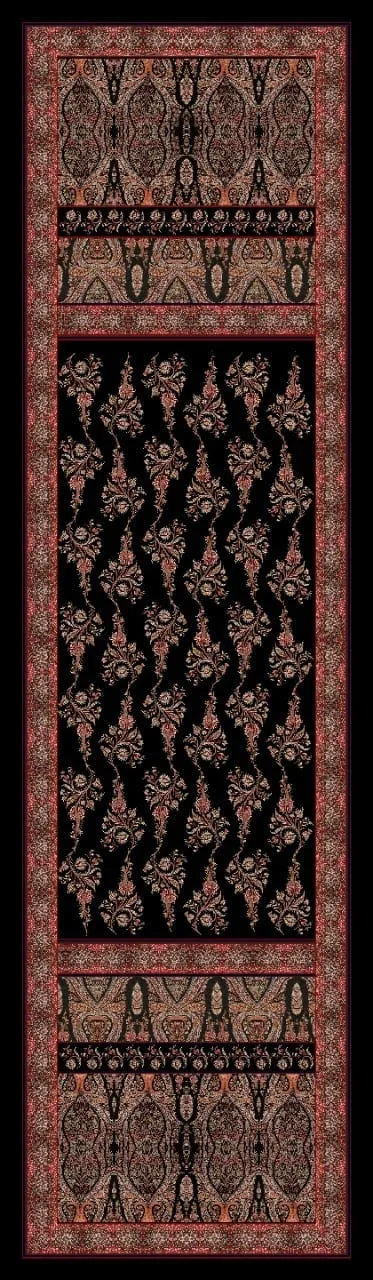
Sarees are the largest single use, followed by dupattas, stoles and scarves. It also appears in kurtis, blouse pieces, evening tops, lehenga overlays and festive export ranges, and occasionally in light home items such as table runners. What these share is that the fabric is allowed to hang freely. Brasso does not suit tailored garments, upholstery, or anything that needs the cloth to hold a shape on its own. If you want velvet with structure, look at a woven cotton velvet or a knitted stretch velvet instead.
How to buy and specify it
Specify width, the 50D or 80D construction, single or multi, the motif and its repeat, the ground and pile colours, and roll length if you are buying by the than rather than by the metre. Ask for a lab dip before bulk and a running sample from the actual lot. Check two things on that sample: burnout edges should be clean, with no thinning or holes in the ground, and on multi brasso the print should sit exactly on the motif. State azo-free dyeing on the order if you are exporting. Established mills such as Shailesh Velvet Industries run a strike-off before bulk, and minimums are usually negotiable.
Frequently asked questions
Is brasso the same as devoré or burnout velvet?
Yes. Devoré is the European term, burnout the American one, and brasso the name used in India. All three describe the same process: chemically removing one fibre from a pile fabric in a pattern.
What is the difference between single and multi brasso?
Single brasso is burnt out and dyed in one colour. Multi brasso adds a multi-colour print aligned to the burnout, so the motifs carry two or more shades. Multi costs more and needs tighter registration control.
How do you wash brasso velvet?
Dry cleaning is safest. If washing at home, use cold water and a gentle hand wash, do not wring, and dry flat away from sun. Steam or press lightly from the reverse, never flat onto the pile.
What width does brasso velvet come in?
Around 44 inches usable width is standard for brasso on a chiffon base. Velvet more broadly is supplied between roughly 42 and 64 inches depending on the quality, so always confirm width before calculating consumption.