Velvet guide
Types of Velvet Fabric: A Complete Buyer's Guide
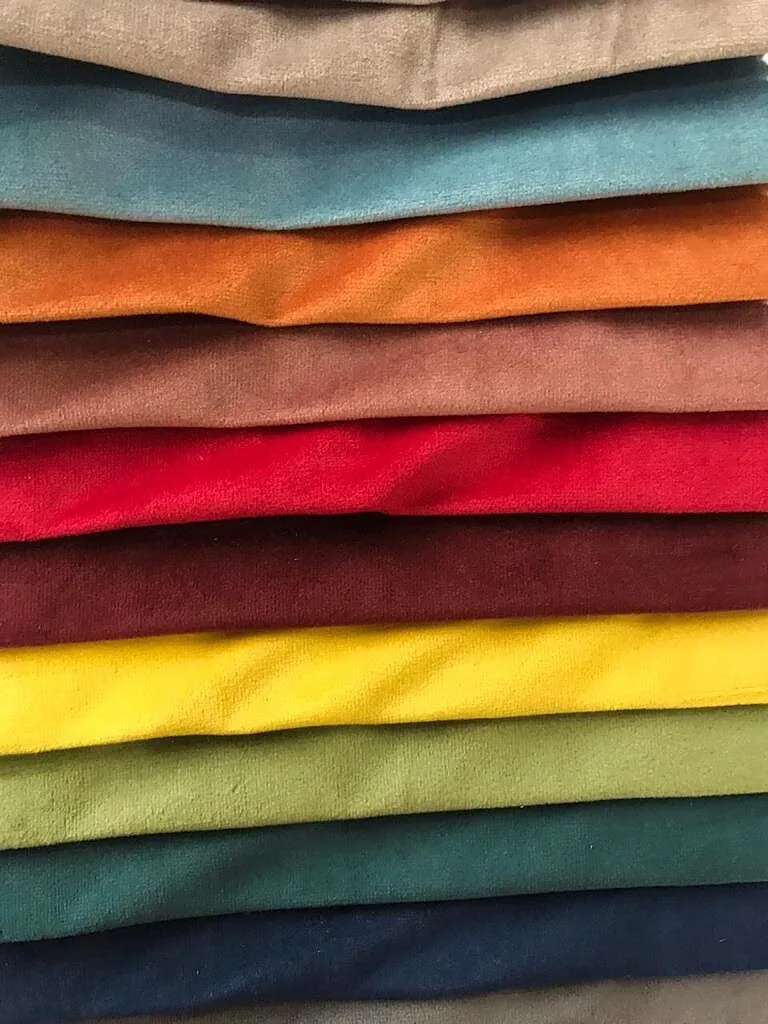
Velvet is not one fabric. It is a family of pile fabrics that differ in fibre, in how the pile is made, and in how it is finished afterwards. Two rolls both labelled velvet can differ by 150 gsm and behave nothing alike. This guide sorts velvet the way a mill sorts it, by fibre, construction and finish, so you can specify what you actually need rather than the word alone.
What counts as velvet
Velvet is a warp-pile fabric. Extra warp yarns are lifted over the ground weave and cut, so the surface is made of short upright fibre ends rather than the weave itself. Most velvet today is woven face to face as a double cloth, two grounds joined by the pile warp and split by a travelling blade. Older wire looms build the pile over inserted wires instead. Because the cut ends all lean one way, velvet has a nap: it looks lighter with the pile and darker against it. Every panel in a garment or a chair cover must be cut in the same direction.
Velvet by fibre
Cotton velvet is matte, dry to the touch and has body. It usually runs 250-320 gsm and takes reactive dyes to deep, flat shades. Viscose (rayon) velvet has the highest sheen and the most fluid drape, commonly 180-240 gsm. Polyester velvet, including micro velvet at 200-300 gsm, is the strongest and most colourfast, and normally the cheapest. Silk velvet is rare and costly, and much of what is sold under that name is a viscose pile on a silk ground. Blends are used for cost or hand: viscose pile on a cotton back, cotton-polyester, and polyester-spandex for knits.
Velvet by construction
Woven warp-pile velvet is the reference type: stable, dense, and the usual choice for upholstery and tailored garments. Weft-pile fabrics, where the pile comes from extra weft floats, give velveteen and corduroy, with shorter pile and a stiffer, more matte surface. Knitted velvet is made on warp-knit (tricot) or circular machines, often with spandex for two-way stretch, and is typically sold 58-60 inches wide at up to about 180 gsm. Pile height ranges from under a millimetre on micro velvet to 5-12 mm on fur-type pile. In woven pile, ask how the pile is anchored: a yarn bound over three ground picks holds better than one bound over a single pick.
Velvet by finish
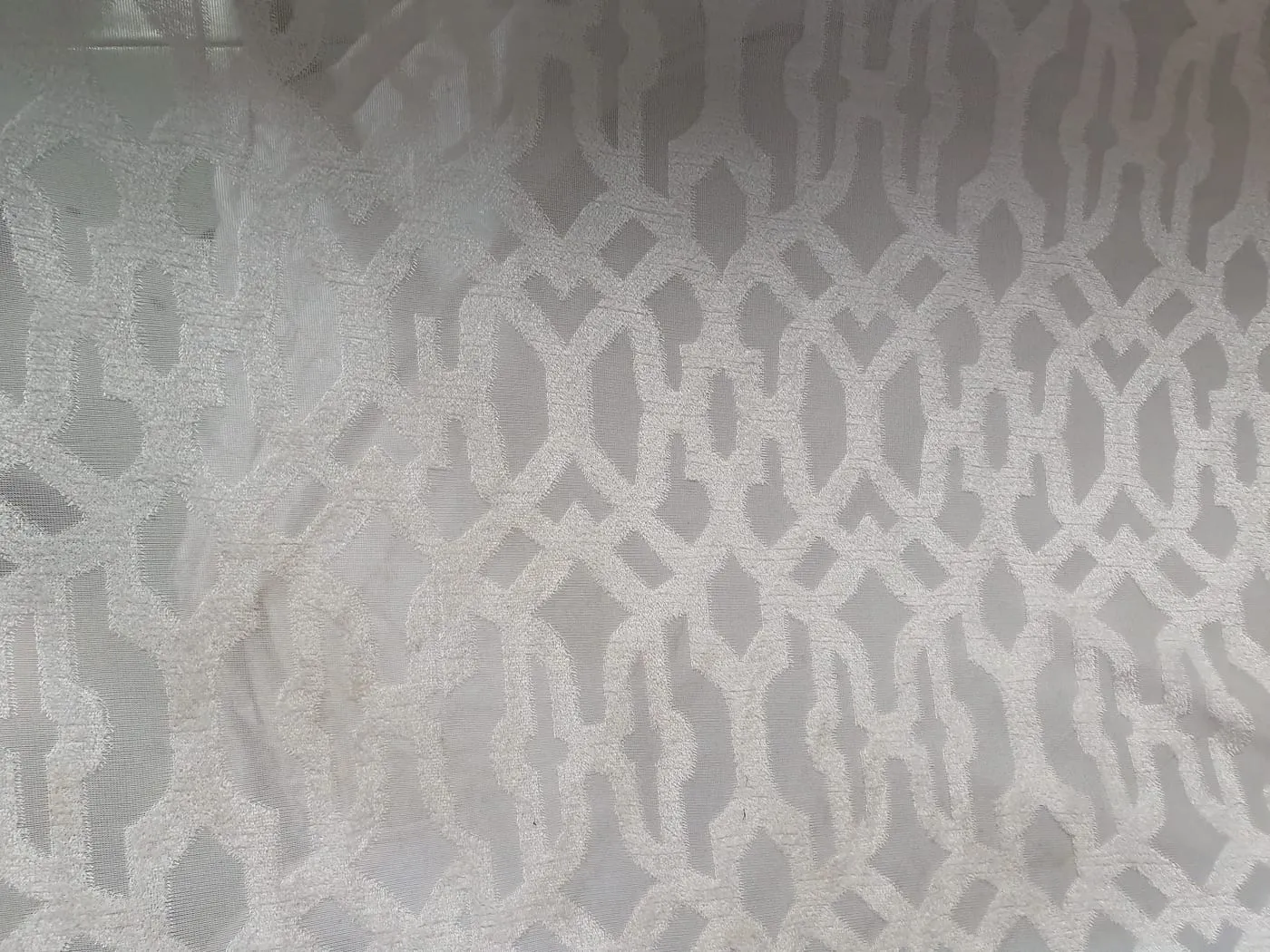
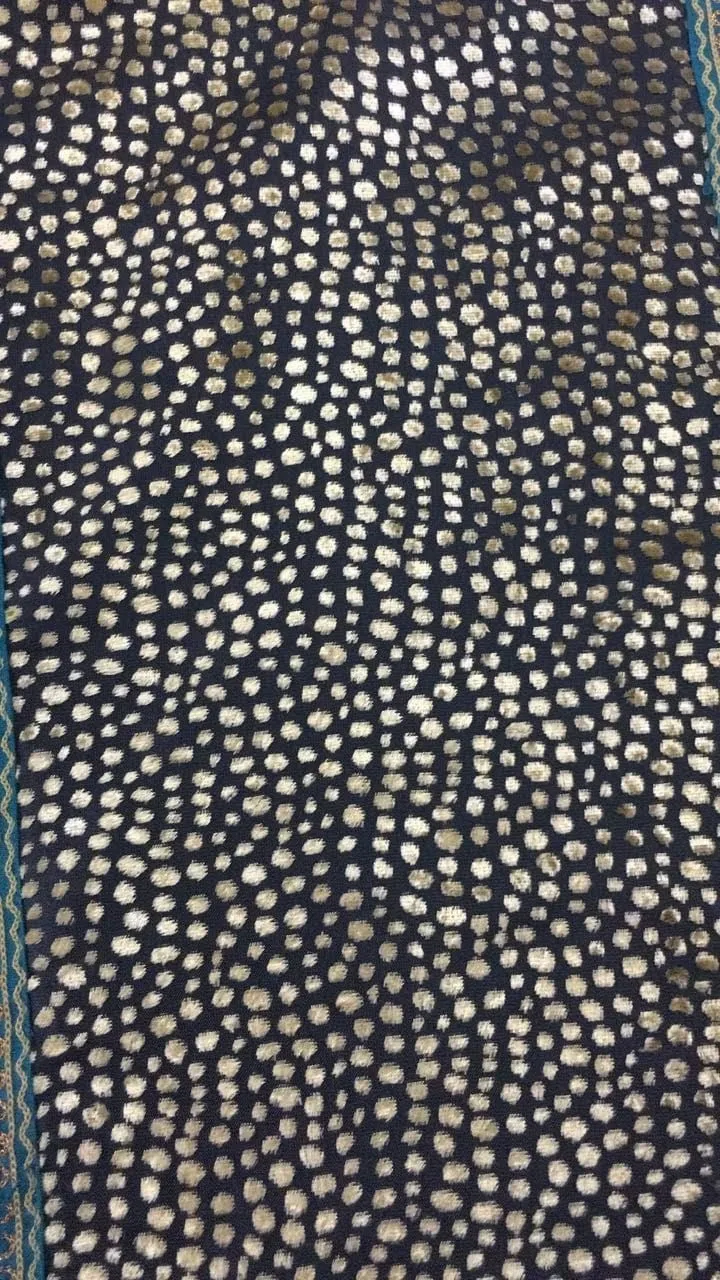
Finishing changes velvet more than fibre does. Brasso (burnout or devore) uses a printed chemical paste that removes the pile in a pattern, leaving a sheer ground, usually 120-160 gsm. Crushed and panne velvets have the pile pressed in random or single directions for broken lustre. Embossed velvet is flattened in a pattern by a heated engraved roller, which sets permanently on polyester. Printed velvet is made by disperse, sublimation or digital printing, typically 200-280 gsm. Flock is not a woven pile: short fibres are fixed electrostatically to a coated base. Foil and sequin finishes are applied on top of finished velvet. Mills such as Shailesh Velvet Industries in Mumbai run one base cloth through several of these routes.
Comparison: which type suits which job
Cotton velvet, 250-320 gsm: matte and structured, for upholstery, jackets and curtains. Viscose velvet, 180-240 gsm: high sheen and fluid fall, for sarees, eveningwear and drapes. Micro velvet, 200-300 gsm: fine short pile and hard wearing, for sofas, cushions and decor. Knitted stretch velvet, up to 180 gsm: two-way stretch, for sherwani, safa, fitted garments and dancewear. Brasso, 120-160 gsm: sheer patterned ground, for dupattas, stoles and scarves. Flock: even matte pile on a taffeta base, for jewellery boxes, packaging and trims. Fur, foil and sequin qualities, 54-64 inches: decorative surfaces for festive wear and display.
Apparel or upholstery
For apparel, weight and drape decide. Stay under about 250 gsm where the garment must fall softly, use knitted stretch where the fit is close, and use viscose where sheen matters. For upholstery, choose a dense short pile over a long one, because long pile flattens where people sit. Expect 300 gsm and upwards, often with a latex or acrylic back-coating. Ask for abrasion data, Martindale to ISO 12947 or Wyzenbeek to ASTM D4157, rather than judging by weight. When you order, fix fibre, gsm, pile height, width (42-64 inches is the usual range), finish and colourfastness in writing, and approve a cut sample first.
Frequently asked questions
How many types of velvet are there?
There is no fixed count. Velvet is classified three ways at once, by fibre, by construction and by finish, so one roll may correctly be called a polyester warp-knit crushed velvet.
Which velvet is best for upholstery?
A dense, short-pile velvet in cotton or polyester, usually 300 gsm or more and often back-coated. Long-pile and lightweight dress velvets flatten and mark under seat use.
What is the difference between brasso and embossed velvet?
Brasso removes the pile chemically, leaving a sheer transparent ground in the pattern. Embossing only flattens the pile with a heated roller. No fibre is removed, so the fabric stays opaque.
Does velvet have to be cut one way?
Yes. The cut pile leans in one direction, so panels cut facing opposite ways read as different shades. Mark the nap direction on the roll and cut every piece the same way.